UCLA · Advanced Quantitative Methods · Program Evaluation · Equity & Inclusion · K–12 Education
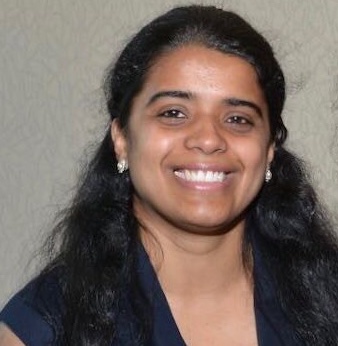
Growing up in India in a society structured by caste — where access to education was deeply unequal — gave me an early and formative understanding of how systemic barriers operate and how they are reproduced through institutions. Fast forward to moving to the United States to pursue my Master's and Doctorate in Education, and the core of my research, my passion, and my long-term vision became strengthening access and equity to educational opportunities for all students.
How I approach educational challenges is shaped by my personal experiences, rigorous academic training to earn my Doctorate in Social Research Methodology from UCLA, the guidance of exceptional mentors, and years of research and evaluation experience across diverse projects. I believe that meaningful change begins with asking the right questions, collecting the right data, and translating that data into insights that inform better decisions.
That's the practice I built Pramāna Research to offer — rigorous, equity-grounded evaluation and applied research for school districts, non-profits, foundations, and public-sector organizations doing work that genuinely matters to the communities they serve.
Jayashri Srinivasan, Ph.D. is an education researcher and evaluation consultant with 12+ years of experience spanning working with K–12 school districts, grant projects federally-funded by National Institutes of Health (NIH), National Science Foundation (NSF), Spencer Foundation, and large-scale international assessments.
She holds a Ph.D. in Social Research Methodology (UCLA) and an M.Ed. in Measurement, Evaluation, Statistics and Assessment (UIC).
Her experience includes leading research and evaluation for the Racial Equity Department at Surrey Schools District, BC, grounded in equity and culturally responsive practice; supporting the evaluation of the NIH-funded BUILD initiative across 11 undergraduate institutions in the United States at UCLA's Coordination & Evaluation Center — the BUILD sites received a combined total of $474-million in grant funding for biomedical training programs; and conducting community-engaged research on Indigenous-language immersion programs, and measuring classroom instructional practices.
She is skilled in both quantitative and qualitative approaches, research design methodologies, and translating complex findings for diverse audiences — including policy makers, community partners, and the public.
Developing Situated Measures of Science Instruction Through an Innovative Electronic Portfolio App for Mobile Devices: Reliability, Validity, and Feasibility.
Adoption of new instructional standards in science demands high-quality information about classroom practice.
Read paper →Interrogating Practice or Show and Tell?: Using a Digital Portfolio to Anchor a Professional Learning Community of Science Teachers.
Read paper →Examining Undergraduates' Intentions to Pursue a Science Career: A Longitudinal Study of a National Biomedical Training Initiative.
Disparities in the participation of individuals from historically excluded groups in science careers persist, particularly at advanced career stages.
Read paper →Evaluating a National Biomedical Training Program Using QuantCrit: Revealing Disparities in Research Self-efficacy for Women of Color Undergraduates.
This study examines how program evaluations can unintentionally reify the exclusion of multiple marginalized student experiences.
Read paper →Investigating the relationship between participation in the BUILD initiative and intent to pursue a science career: A cross-sectional analysis.
Read paper →Inequalities in Access to Educational Opportunities: An Investigation of the PISA 2009 Dataset Using a Multilevel-IRT Framework
Using PISA — the world's largest comparative education study, assessing 15-year-olds across 80+ countries — to draw meaningful cross-national implications for science education, student learning, and equity. This work examines what large-scale international datasets can reveal about the factors that shape student outcomes and what those findings mean for districts, policymakers, and researchers.
Read dissertation →A validation study of mentees' views of mentors' cultural diversity awareness behaviors (CDA race/ethnicity behaviors scale).
Journal of Clinical and Translational Science, 10(1), e42.
doi.org/10.1017/cts.2025.10109 →Psychometric Properties of the Science Self-Efficacy Scale for STEMM Undergraduates.
European Journal of Investigation in Health, Psychology and Education, 15(7), 124.
doi.org/10.3390/ejihpe15070124 →Examining Undergraduates' Intentions to Pursue a Science Career: A Longitudinal Study of a National Biomedical Training Initiative.
Education Sciences, 15(7), 825.
doi.org/10.3390/educsci15070825 →Evaluating a National Biomedical Training Program Using QuantCrit: Revealing Disparities in Research Self-efficacy for Women of Color Undergraduates.
CBE Life Sciences Education, 23(4), ar54.
doi.org/10.1187/cbe.24-02-0047 →Investigating the relationship between participation in the BUILD initiative and intent to pursue a science career: A cross-sectional analysis.
Evaluation and Program Planning, 102, 102380.
doi.org/10.1016/j.evalprogplan.2023.102380 →Developing Situated Measures of Science Instruction Through an Innovative Electronic Portfolio App for Mobile Devices: Reliability, Validity, and Feasibility.
Educational and Psychological Measurement, 82(6), 1180–1202.
doi.org/10.1177/00131644211064923 →Interrogating Practice or Show and Tell?: Using a Digital Portfolio to Anchor a Professional Learning Community of Science Teachers.
Journal of Science Teacher Education, 32(2), 210–241.
doi.org/10.1080/1046560X.2020.1808267 →Inequalities in Access to Educational Opportunities: An Investigation of the PISA 2009 Dataset Using a Multilevel-IRT Framework.
Doctoral Dissertation, University of California, Los Angeles.
ProQuest →Let's talk about your evaluation, research, or data needs.
Email Pramāna Research →